
Disclaimer: Quick Jobs. This site provides business content for informational purposes only.
Construction sites, commercial properties, and shared public spaces have always carried some risk, but the rules governing who pays when something goes wrong are shifting fast. Rising liability claims are pushing property owners and businesses to rethink everything from signage to maintenance schedules. If you own property, manage a jobsite, or simply want to understand your rights after an accident, knowing how these changes affect everyday safety decisions can help you make smarter choices.
This article breaks down what’s driving the trend and what it means for the people most affected by it.
Why Liability Claims Are Climbing Across Job Sites
Insurance data over the past decade shows a steady rise in claims tied to falls, equipment malfunctions, and inadequate site maintenance. Falls remain the single largest category, often linked to scaffolding, ladders, or poorly marked elevation changes, while equipment-related claims increasingly involve improperly maintained machinery or operators lacking proper certification. Industry reports suggest average claim payouts have climbed by double digits in recent years, with some severe injury cases now settling well into seven figures.
Much of this increase stems from larger jury awards and a growing public awareness of legal options after an injury. So-called “nuclear verdicts,” where juries award damages far exceeding historical norms, have become more common and are reshaping how insurers price risk. Social media and easier access to legal consultations have also made injured workers and visitors more likely to pursue formal claims rather than accept informal settlements. Property owners are also facing more scrutiny from insurers who now require stricter documentation of safety practices before issuing or renewing policies. This often means proof of regular equipment inspections, written training records, and incident logs going back several years.
Some insurers have begun denying coverage outright or imposing steep premium increases on sites that can’t produce this paperwork. As a result, site safety has shifted from a compliance checkbox to a core part of financial planning. Forward-looking companies now treat safety documentation as a budget line item and a risk-management tool, not just a regulatory requirement, recognizing that a single uninsured or underinsured incident can threaten the viability of an entire project.
- Juries are awarding higher settlements than they did ten years ago, with some “nuclear verdicts” now exceeding $10 million for construction-related injuries
- Insurers are demanding proof of regular inspections before renewing coverage, and many now require digital documentation rather than paper logs
- Social media has made it easier for injured parties to document unsafe conditions, turning a single photo or video into key evidence within hours of an incident
- Workers and visitors are more aware of their legal rights than in previous generations, often researching liability laws online before ever contacting an attorney
- Third-party contractors and subcontractors are being named in lawsuits more frequently, complicating who ultimately bears financial responsibility
- Regulatory bodies like OSHA have increased fine amounts and inspection frequency, adding pressure on top of civil liability risks
How Slip and Fall Incidents Are Driving Policy Changes
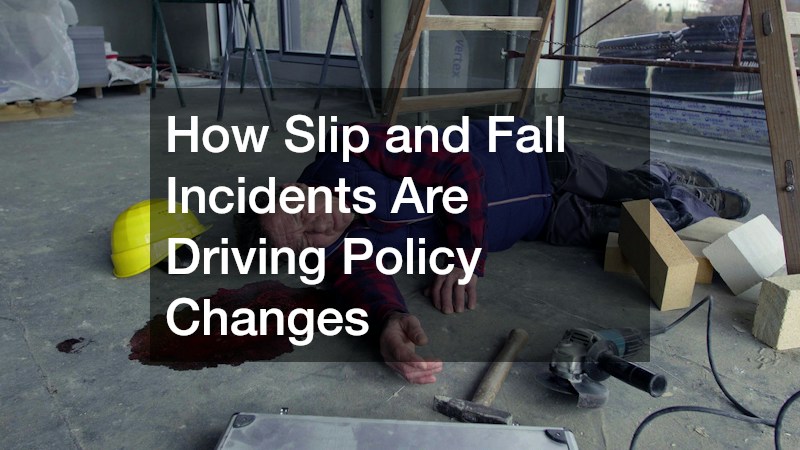
Slip and fall cases remain one of the most common sources of liability claims on both commercial and residential properties. Wet floors, uneven pavement, and poor lighting are frequent culprits, and property owners who ignore these hazards often find themselves facing expensive legal battles. Many businesses now consult with a best slip and fall attorney early in the claims process, not to fight responsibility but to understand how courts are interpreting negligence standards in their state. This proactive approach has pushed companies to adopt more frequent inspection schedules and clearer incident reporting systems.
The ripple effect extends beyond the business being sued. Insurance premiums tend to rise after a claim, which means even a single incident can affect a company’s budget for years. Property managers are increasingly training staff to spot hazards before they become liabilities, treating prevention as cheaper than litigation.
What Commercial Property Owners Are Changing About Maintenance
Routine maintenance has become a central focus for commercial property owners trying to reduce their exposure to lawsuits. This includes everything from parking lot repairs to HVAC servicing, but one area that often gets overlooked is wastewater management. Facilities that rely on septic systems have started scheduling commercial septic system pumping more frequently, since backups and overflows can create hazardous conditions that lead directly to injury claims. A neglected system doesn’t just smell bad; it can cause flooring to become slippery or structurally unsound, creating exactly the kind of hazard that ends up in court.
- Backed-up septic systems can create slip hazards in restrooms and break rooms
- Foul odors and standing water are often cited as evidence of negligence in claims
- Regular pumping schedules are now part of many commercial insurance requirements
- Documentation of maintenance visits helps protect owners if a claim is filed
How Construction Firms Are Responding to Equipment-Related Claims
Equipment failures and improper site grading are another major source of liability exposure, particularly for firms working on uneven terrain or large excavation projects. Commercial contractors have started investing more heavily in quality equipment and routine maintenance checks to avoid accidents tied to faulty tools or poorly maintained machinery. Something as simple as upgrading to durable carbon grader blades can reduce the risk of equipment malfunction during grading work, which in turn lowers the odds of an accident that could lead to a lawsuit. These upgrades aren’t just about performance; they’re increasingly viewed as a liability reduction strategy.
Site supervisors are also documenting equipment inspections more thoroughly than before. A paper trail showing that machinery was checked and maintained on schedule can make a significant difference if an incident does occur. Insurers have noticed this shift too, sometimes offering reduced premiums to contractors who can prove consistent equipment upkeep.
What Injured Workers and Visitors Should Know About Their Rights
Anyone injured on a commercial property or construction site has the right to understand what happened and why. Many people assume they have no recourse if they signed a waiver, received no warning signs, or were technically trespassing, but the reality is often more nuanced than it first appears. Waivers, for instance, don’t always hold up in court if the injury resulted from gross negligence or a hazard the property owner knew about and failed to fix.
Personal injury lawyers frequently point out that property owners still owe a duty of care in many situations, even when liability seems unclear at first glance. This duty can extend to subcontractors, delivery drivers, and even some trespassers, depending on the circumstances and local premises liability laws. Factors like whether the hazard was hidden, whether proper signage was posted, and how quickly the owner responded to a known risk can all affect who ends up bearing responsibility. Documentation matters enormously in these cases. Photos of the scene, incident reports, witness contact information, and medical records created soon after the injury can shape whether a claim succeeds months or years later.
Workers and visitors who wait too long to report an injury or seek treatment often find their claims harder to prove, even when the underlying case is legitimate. Understanding this distinction can make the difference between walking away from an injury with nothing and receiving compensation for medical bills, lost wages, and long-term rehabilitation costs. Given how much nuance exists around comparative fault, statutes of limitations, and employer liability versus third-party liability, consulting a professional early on is often the only way to know whether a claim is worth pursuing.
- Waivers do not always eliminate liability — courts routinely refuse to enforce them when gross negligence, recklessness, or safety code violations are involved
- Document the scene within 24-48 hours: photograph hazards, equipment, and injuries, and save torn clothing or damaged gear as physical evidence
- Request a copy of the incident report filed with the site or employer, since discrepancies between that report and your own account can matter later
- Witness statements carry more weight when collected quickly, before memories fade or coworkers feel pressured by employers
- Get witness contact information immediately, since people often change jobs or become harder to reach within weeks
- State laws vary widely on comparative negligence — some bar recovery entirely if you’re found more than 50% at fault, while others allow reduced compensation regardless of fault share
- Consult a local attorney early, since statutes of limitations for injury claims can range from one to several years depending on the state
How Legal Representation Shapes the Outcome of a Claim
The complexity of liability law means that the choice of legal representation can significantly affect the outcome of a claim. A well-established personal injury law firm typically has experience negotiating with insurance companies that are motivated to minimize payouts. These firms often work on contingency, meaning clients don’t pay unless they win, which removes a major barrier for people who might otherwise avoid pursuing a legitimate claim. Having experienced representation also tends to speed up settlement timelines, since insurers are less likely to drag out negotiations with a firm that has a track record of taking cases to trial.
Choosing the right legal team isn’t just about winning a settlement; it’s about making sure the full scope of damages is accounted for. This includes future medical costs, lost earning potential, and even emotional distress in some cases. A thorough legal review can uncover damages that an injured party might not have considered on their own.
Practical Steps Property Owners Can Take Right Now
Reducing liability exposure doesn’t require a complete overhaul of operations, but it does require consistency. Simple changes to daily routines can make a measurable difference in both safety outcomes and legal standing. Owners who treat safety as an ongoing process rather than a one-time fix tend to fare better when claims do arise.
- Schedule regular walkthroughs to identify hazards before they cause injuries
- Keep written records of all maintenance and repair work
- Train staff to recognize and report unsafe conditions immediately
- Review insurance policies annually to confirm coverage matches current risks
- Address known hazards promptly rather than waiting for a scheduled fix
Conclusion
Rising liability claims are reshaping how properties are maintained, how equipment is managed, and how quickly hazards get addressed. Whether you’re a property owner trying to reduce risk or someone who has been injured and isn’t sure what to do next, understanding these shifting standards puts you in a stronger position. Taking proactive steps now, from better maintenance records to knowing when to seek legal advice, can save significant time, money, and stress later. The safest path forward is staying informed and acting before small issues become costly claims.